

+86 185 2929 8075




+86 185 2929 8075

Aug.27,2026
Buying used vehicles for export is not a showroom decision. The importer must confirm that each unit is the vehicle described, that its condition evidence is recent and traceable, and that unresolved findings are recorded before payment and shipment. A practical checklist therefore connects identity, history, physical condition, operation, documents, and buyer approval. When reviewing used cars from China, treat photographs and sales descriptions as the start of verification, not the conclusion. The required depth should reflect vehicle age, value, powertrain, intended use, destination-market rules, and order size. Inspection can reduce uncertainty, but it cannot guarantee future reliability, reveal every hidden defect, or replace the importer’s own compliance review.
Begin by matching the vehicle identification number across the car, available registration or ownership records, sales documents, and inspection material. Ask for clear, readable images of the VIN plate and any stamped VIN location relevant to the model. The image should show enough surrounding area to identify where it was taken, rather than only a tightly cropped sequence of characters. Also compare the make, model, model year, trim, body type, fuel type, engine or motor information, transmission, color, and steering position with the purchase request.
Nanling Auto’s vehicle export services can support inspection and document coordination, but the scope, report issuer, date, and covered items should be agreed for each order.
A displayed odometer is one evidence point, not proof of lifetime mileage. Request a dashboard image with the ignition on, a short video showing the reading, and available records that can be compared chronologically. Depending on the vehicle and source channel, useful material may include service entries, repair invoices, prior inspection records, registration information, auction sheets, or fleet maintenance records. Availability varies, so the file should state what was provided and what remains unavailable.
Look for inconsistencies between wear and the stated mileage: heavily polished steering surfaces, worn pedals, damaged seat bolsters, control-button wear, tire dates, or a service record showing a higher earlier reading. None of these observations alone proves odometer alteration. They are reasons to hold or clarify the unit. Accident and repair history should be handled similarly: ask what database, document, owner statement, or physical observation supports the claim, and record the limits of that evidence.
Exterior inspection should move beyond a set of attractive corner photographs. Request systematic views of every panel, glass area, lamp, wheel, tire, door opening, and cargo area under consistent lighting. Note dents, scratches, corrosion, paint mismatch, cracked lamps, chipped glass, missing trim, tire damage, and signs of water entry. If paint-depth readings are supplied, record the device, locations tested, readings, and interpretation rather than reducing the result to “original paint” or “repainted.”
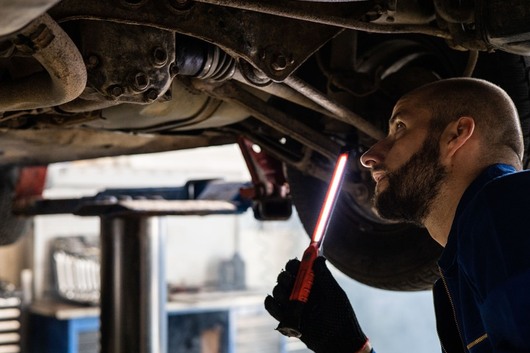
Structural and underbody checks deserve separate evidence. Review pillars, sills, chassis rails, aprons, strut towers, floor sections, welds, sealant, fasteners, suspension mounting points, and accessible areas around the engine or traction battery. Ask for lift images or a continuous underbody video when feasible. The aim is to identify visible deformation, corrosion, leakage, impact marks, fresh coating, irregular welding, or repair indicators. A sourcing request through vehicle sourcing should define which findings are unacceptable before candidate vehicles are selected.
Functional testing should cover start-up, warning lamps, engine idle or ready mode, steering, brakes, transmission selection, parking brake, lighting, windows, mirrors, locks, seats, displays, cameras, sensors, air conditioning, audio, and charging-related equipment where fitted. A road test, when legally and practically possible, can document acceleration, braking, steering alignment, transmission behavior, vibration, abnormal noise, and temperature indications. Record test conditions and distance rather than using vague phrases such as “drives perfectly.”
Diagnostic scan results can add useful evidence if the report identifies the vehicle, scan date, equipment, systems checked, stored codes, and whether codes were cleared. A clean scan does not establish that every system is defect-free. Conversely, a code requires interpretation and may justify clarification, repair discussion, or rejection depending on severity and buyer criteria.
Used battery electric, plug-in hybrid, conventional hybrid, and extended-range vehicles require checks beyond a combustion vehicle checklist. Confirm the exact powertrain and trim from the VIN-linked vehicle data because visually similar versions may use different batteries, charging interfaces, software, or market specifications. The broader vehicle range may help define candidate categories, but every unit’s configuration remains subject to individual confirmation.
Battery condition can vary with chemistry, age, temperature, usage, software estimation, and test procedure. It should therefore be reported as measured evidence with limitations, not as a promise of remaining life, range, warranty, or destination-market acceptance.
Remote buyers need an evidence pack that can be audited later. Ask for dated photos and videos organized by VIN, plus an inspection report that names the issuer and describes its scope. The inspector may be the supplier, seller, Nanling Auto team, or another agreed party; independence should never be assumed. Where an issue is difficult to judge from recorded material, request a live video walk-around that moves from the VIN to the disputed area without interruption.
The agreed evidence, acceptance points, and timing should align with the procurement and cooperation process. Inspection approval should occur at the contractually defined stage and should not be inferred from informal chat alone.
A batch should never be approved only from a representative vehicle. Even when units share a model and year, mileage, repair history, tires, accessories, warning codes, paintwork, battery readings, and documents may differ. Create one row per VIN and attach the corresponding evidence. The matrix enables the importer to compare units, define substitutions, and prevent one vehicle’s images or findings from being applied to the whole order.
| Field | Per-vehicle record | Decision use |
|---|---|---|
| Identity | VIN, trim, year basis, color, powertrain | Match purchase specification |
| Condition | Mileage evidence, defects, repair indicators, tires | Compare against acceptance limits |
| Functions | Warning lamps, road-test notes, diagnostic findings | Identify action before approval |
| EV or hybrid | Report method, battery values, charging evidence | Assess disclosed powertrain evidence |
| Documents | Available records and unresolved gaps | Check order and export readiness |
| Status | Hold, clarify, or approve with date and reviewer | Control batch release |
Keep version control over the matrix. If a vehicle is replaced, create a new row and approval record rather than overwriting the rejected unit. This preserves the audit trail for commercial discussion, loading preparation, and final reconciliation.
The checklist becomes useful only when observations lead to controlled decisions. Define who can approve a unit, which findings require evidence, and which conditions are outside the buyer’s acceptance policy. The table below is a workflow guide, not a universal condition grade.
| Status | Use when | Required next action |
|---|---|---|
| Hold | VIN inconsistency, suspected structural issue, critical warning, material document gap, or evidence that cannot support a decision | Stop approval and request defined follow-up evidence, inspection, replacement, or commercial resolution |
| Clarify | A finding may be acceptable but its extent, cause, repair, included accessory, or record is unclear | Ask a specific question, set a deadline, and attach the answer to that VIN |
| Approve | Identity matches, required evidence is complete enough for the agreed scope, and disclosed findings meet buyer criteria | Record reviewer, date, accepted exceptions, and the evidence-pack version |
Approval does not mean a vehicle is accident-free, repair-free, maintenance-free, or guaranteed to perform indefinitely. It means the disclosed evidence meets the buyer’s documented acceptance criteria at that decision point. Destination-country age, emissions, steering-side, safety, charging, tax, customs, and registration rules still require separate verification by the importer and relevant authorities.
Send the checklist before sourcing begins, not after vehicles have been reserved. State the required vehicle specification, evidence format, inspection scope, unacceptable findings, substitution rules, document needs, and approval authority. This makes quotations easier to compare and helps all parties distinguish a request for information from a binding acceptance decision.
Nanling Auto can help coordinate candidate sourcing, vehicle-condition evidence, batch records, and export preparation subject to actual vehicle availability and the agreed order scope. To discuss a used-car or mixed-powertrain procurement requirement, contact Nanling Auto with your target market, models, quantities, specifications, and inspection priorities. Final vehicle acceptance, commercial terms, documents, logistics, and destination compliance should be confirmed for each transaction.
Sep. 21, 2026
Sep. 17, 2026
5-8 years
Sedan
Infiniti Q50L 2018 2.0T Jinxing Edition China V
Infiniti Q50L 2018 2.0T Jinxing Edition China V

90400

Rear-wheel Drive

2.0T 211lp L4
$8135

1-3 years
Sedan
Chevrolet Cavalier 2024 1.5L Yuexiang Edition
Chevrolet Cavalier 2024 1.5L Yuexiang Edition
59478
Front-wheel Drive
1.5L 113lp L4
$5426

3-5 years
Sedan
Honda Accord 2021 260TURBO Luxury Starry Sky Limited Edition
Honda Accord 2021 260TURBO Luxury Starry Sky Limited Edition
21900
Front-wheel Drive
1.5T 194lp L4
$14099

5-8 years
Sedan
Honda Crider 2019 180Turbo CVT Luxury Edition China VI
Honda Crider 2019 180Turbo CVT Luxury Edition China VI
67100
Front-wheel Drive
1.0T 122lp L3
$5070

5-8 years
Sedan
Honda Accord 2018 Hybrid 2.0L Sharp Intelligent Edition China VI
Honda Accord 2018 Hybrid 2.0L Sharp Intelligent Edition China VI
75000
Front-wheel Drive
2.0L 146lp L4
$11117

5-8 years
SUV
Honda CR‑V 2019 240TURBO CVT 2WD Comfort Edition China VI
Honda CR‑V 2019 240TURBO CVT 2WD Comfort Edition China VI
54800
Front-wheel Drive
1.5T 193lp L4
$11117

Over 10 years
SUV
Honda CR-V 2010 2.0L Automatic 4WD Classic Edition Exi
Honda CR-V 2010 2.0L Automatic 4WD Classic Edition Exi
129200
Four-wheel Drive
2.0L 150lp L4
$679

3-5 years
Sedan
Mercedes-Benz 2022 A 200 L Sport Sedan
Mercedes-Benz 2022 A 200 L Sport Sedan
42200
Front-wheel Drive
1.3T 163lp L4
$14099


