

+86 185 2929 8075




+86 185 2929 8075

Aug.24,2026
For vehicle importers, the choice between roll-on/roll-off shipping and container shipping should begin with the order, route, vehicle condition, and destination requirements—not with a general claim that one method is cheaper or safer. Nanling Auto can coordinate vehicle export services, including shipment preparation and logistics communication, but it is not a carrier, shipowner, port, or customs authority. Final acceptance, handling rules, schedules, and charges must be confirmed with the relevant service providers for each shipment.
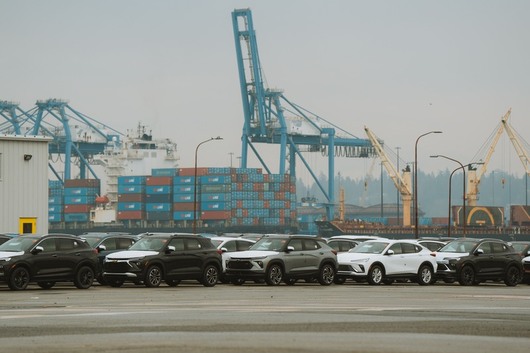
A useful comparison therefore asks practical questions: Can the selected vehicles move under their own power? Does the route accept that cargo type? What protection and evidence does the buyer require? How many vehicles are in the order? Which costs are included in the quotation? The answers form a shipment plan that can be reviewed before booking rather than a decision based on a single headline rate.
Ro-Ro shipping is designed for wheeled cargo that can be driven or moved on and off a vessel through ramps. Vehicles are typically delivered to the terminal under the carrier's operating rules, processed for loading, secured in the vessel, and released through the destination terminal. The vehicle remains an individual cargo unit rather than being enclosed inside a container.
Container shipping places vehicles inside a shipping container, where they must be positioned and secured under an approved loading plan. The container is then sealed and handled through the normal container terminal system. Importers reviewing current vehicle options should separate the vehicle purchase decision from the transport decision because dimensions, condition, propulsion type, and cargo additions can change what is operationally feasible.
For importers comparing used vehicles from China, a shipping method has little value if it is not offered on the required corridor. Ro-Ro services may call at different ports from container lines, and cargo acceptance can vary by vessel, terminal, destination, and booking period. A direct service may reduce transfers, while an indirect itinerary may introduce transshipment handling. Neither pattern should be assumed without a current carrier proposal.
Compare the Chinese port of loading, destination port, inland distance on both sides, terminal receiving rules, frequency of suitable sailings, and any transshipment points. Nanling Auto can help organize route discussions and shipment updates, but the carrier and terminal remain responsible for confirming service availability and cargo acceptance.
Ro-Ro bookings commonly require vehicles to start, steer, brake, and move safely, although the exact standard belongs to the carrier and terminal. A vehicle with a weak battery, fluid leak, missing key, damaged wheel, restricted ground clearance, or unresolved warning condition may be rejected or require a different handling arrangement. Importers should request the current operability rules before delivery to port.
Container shipping may offer more flexibility for a vehicle that cannot be driven normally, but non-running cargo still needs suitable lifting, towing, loading, and securing arrangements. The equipment, labor, and terminal permissions must be quoted rather than assumed. Nanling Auto's logistics coordination scope can help organize shipment discussions, but condition and operability should be confirmed for each unit.
A sealed container can limit casual access and shield vehicles from open-air exposure during parts of the journey. It may also allow controlled placement of approved related cargo when the carrier, customs rules, and securing plan permit it. However, the protection depends on correct loading, lashing, ventilation, moisture management, and container condition; enclosure alone does not remove transport risk.
Ro-Ro avoids container stuffing and unloading, but vehicles pass through terminal and vessel handling processes as individual units. Buyers should ask who may access the vehicle, what may remain inside it, how keys are controlled, when condition is recorded, and what the claim procedure requires. The better option depends on the buyer's evidence standard, route controls, cargo profile, and insurance terms.
Order size affects the comparison, but there is no universal vehicles-per-container figure. Vehicle dimensions, weight distribution, permitted loading method, securing space, container type, and local rules determine the feasible plan. A quotation should identify the proposed units and loading assumptions instead of applying a generic capacity estimate to every sedan, SUV, pickup, van, or mixed batch.
Ro-Ro can be practical for individual operable vehicles or larger batches on a suitable route, while containers may support consolidated planning where dimensions and loading controls align. Mixed orders require unit-level data before either method is selected. Buyers can use the procurement and cooperation process to align sourcing, inspection, documentation, payment milestones, and shipment preparation before booking.
Do not compare only the ocean freight line. Request a written breakdown covering inland delivery to the Chinese port, export handling, terminal charges, documentation, loading or stuffing, securing materials, carrier freight, insurance basis, destination terminal charges, unloading, storage triggers, and any onward transport requested. Some items may be payable to different parties or excluded from the initial offer.
The commercial basis also matters. Confirm currency, quotation validity, cargo description, ports, Incoterms if used, free-time assumptions, cancellation terms, amendment fees, and responsibility for delays outside the supplier's control. Destination duties, taxes, clearance, registration, inspection, and port charges should not be treated as included unless the quotation names them clearly. A lower initial line item can produce a higher total landed cost if important handling steps are omitted.
Battery electric vehicles, plug-in hybrids, conventional hybrids, and extended-range vehicles can face carrier-specific acceptance and documentation rules. Requirements may address battery type, vehicle condition, state of charge, damage history, warning indicators, recalls, isolation procedures, or supporting battery information. These rules can differ by carrier, vessel, port, and transit route, so prior acceptance on another shipment is not sufficient evidence.
Before booking, send accurate propulsion details and the vehicle identification data requested by the logistics provider. Ask the carrier or booking agent to confirm acceptance in writing and identify any documents, labels, inspections, or emergency information required. Nanling Auto can coordinate available vehicle and export information, but it cannot guarantee carrier acceptance or destination compliance.
Condition evidence should be collected before the vehicle enters terminal or loading custody. A practical package can include dated exterior and interior images, a walk-around video, dashboard and warning-light records, odometer display, keys and accessories, visible damage notes, tire condition, and confirmation that prohibited personal items are absent. For a container, record the loading sequence, securing points, materials, and seal number where applicable.
Match the evidence to the sales contract, inspection record, booking details, and transport insurance requirements. Record who produced each inspection or image set and when it was created; do not describe a supplier inspection as independent third-party certification unless that is documented. At destination, capture condition before moving the vehicle beyond the point specified by the carrier or insurer's claim procedure.
The matrix below is a screening tool, not a booking decision. Current route availability, carrier terms, vehicle data, and a complete quotation should control the final choice.
| Decision factor | Ro-Ro may fit when | Container may fit when | Confirm before booking |
|---|---|---|---|
| Route | A suitable vehicle service connects practical ports | A suitable container service better matches the corridor | Ports, transshipment, receiving window, and current sailing |
| Operability | Each unit meets the carrier's movement rules | Special loading for a non-running unit is approved | Starting, steering, braking, leakage, keys, and handling equipment |
| Protection | Terminal and vessel handling controls meet the buyer's needs | Enclosure and a verified securing plan meet the buyer's needs | Access, weather exposure, lashing, moisture, insurance, and claims |
| Quantity | Individual units or a batch align with available capacity | Vehicle dimensions support an approved loading plan | Unit list, dimensions, weights, container type, and load diagram |
| Total cost | The complete route quotation is competitive for the order | Stuffing and destination unloading are justified in the total | All origin, freight, destination, storage, and inland cost lines |
| EV or hybrid | The carrier confirms the propulsion type and condition | The carrier confirms container acceptance and battery conditions | Written acceptance, required battery data, labels, and documents |
A reliable comparison needs a specific vehicle list, destination, preferred timing window, operability status, propulsion details, and evidence requirements. Share those inputs when you contact Nanling Auto for sourcing and export coordination. The team can help assemble vehicle information, align pre-loading checks, and request logistics options for review; the final carrier, route, charges, sailing, cargo acceptance, insurance, and destination obligations remain subject to written confirmation for the order.
Sep. 21, 2026
Sep. 17, 2026
5-8 years
Sedan
Infiniti Q50L 2018 2.0T Jinxing Edition China V
Infiniti Q50L 2018 2.0T Jinxing Edition China V

90400

Rear-wheel Drive

2.0T 211lp L4
$8135

1-3 years
Sedan
Chevrolet Cavalier 2024 1.5L Yuexiang Edition
Chevrolet Cavalier 2024 1.5L Yuexiang Edition
59478
Front-wheel Drive
1.5L 113lp L4
$5426

3-5 years
Sedan
Honda Accord 2021 260TURBO Luxury Starry Sky Limited Edition
Honda Accord 2021 260TURBO Luxury Starry Sky Limited Edition
21900
Front-wheel Drive
1.5T 194lp L4
$14099

5-8 years
Sedan
Honda Crider 2019 180Turbo CVT Luxury Edition China VI
Honda Crider 2019 180Turbo CVT Luxury Edition China VI
67100
Front-wheel Drive
1.0T 122lp L3
$5070

5-8 years
Sedan
Honda Accord 2018 Hybrid 2.0L Sharp Intelligent Edition China VI
Honda Accord 2018 Hybrid 2.0L Sharp Intelligent Edition China VI
75000
Front-wheel Drive
2.0L 146lp L4
$11117

5-8 years
SUV
Honda CR‑V 2019 240TURBO CVT 2WD Comfort Edition China VI
Honda CR‑V 2019 240TURBO CVT 2WD Comfort Edition China VI
54800
Front-wheel Drive
1.5T 193lp L4
$11117

Over 10 years
SUV
Honda CR-V 2010 2.0L Automatic 4WD Classic Edition Exi
Honda CR-V 2010 2.0L Automatic 4WD Classic Edition Exi
129200
Four-wheel Drive
2.0L 150lp L4
$679

3-5 years
Sedan
Mercedes-Benz 2022 A 200 L Sport Sedan
Mercedes-Benz 2022 A 200 L Sport Sedan
42200
Front-wheel Drive
1.3T 163lp L4
$14099


