

+86 185 2929 8075




+86 185 2929 8075

Aug.18,2026
For an importer, choosing between a battery electric vehicle, plug-in hybrid, conventional hybrid, and extended-range electric vehicle is not simply a question of preferred technology. The label affects charging plans, fuel requirements, battery documentation, workshop preparation, transport instructions, and the evidence that must be checked before an order is confirmed. Buyers reviewing new cars from China should therefore treat the powertrain name as the start of due diligence, not as a complete specification.
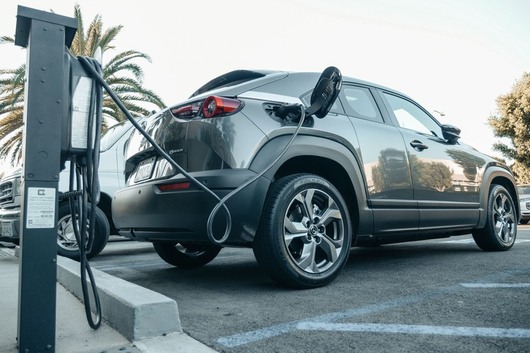
The same model family may include several architectures, and market-facing names do not always explain how the engine, motor, and battery work together. Registration categories and certificate wording can also differ by destination. A useful sourcing decision begins with exact vehicle data: model year, trim, VIN or production batch where available, homologation documents, charging interface, battery details, and the operating conditions used for any range claim.
BEV means battery electric vehicle. Propulsion comes from one or more electric motors, with energy stored in a traction battery. A BEV has no onboard combustion engine for propulsion or range extension, so usable charging access and the local electricity environment are central procurement questions.
A PHEV combines electric drive components with a combustion engine and has a traction battery that can be charged from an external source. The engine and motor may contribute to vehicle movement in different ways depending on the design. Importers should not infer the mechanical layout from the PHEV badge alone.
An HEV combines a combustion engine with an electric motor and a smaller battery, but it is usually not externally rechargeable. The vehicle recovers energy while driving and manages the engine-motor combination internally. The precise specification must still be checked because manufacturers may use different hybrid systems and market terminology.
An EREV uses electric traction while its combustion engine primarily generates electricity to support the battery and extend operating range. It should not be treated as another name for every PHEV. Some regulatory systems may group vehicles differently, so buyers need both the technical architecture and the category shown on the relevant vehicle documents.
| Powertrain | Energy and propulsion | External charging | Priority confirmation |
|---|---|---|---|
| BEV | Battery supplies electric motor propulsion | Required for routine energy supply | Connector, voltage, charging performance, battery documents, usable range basis |
| PHEV | Engine and electric system operate through a model-specific layout | Yes | Electric-only range, charging interface, engine role, fuel and emissions specification |
| HEV | Engine and motor work together; battery is managed onboard | Usually no | Fuel grade, emissions category, hybrid system specification, service capability |
| EREV | Electric traction; engine primarily generates electricity | Yes | Generator architecture, electric and total range basis, charging interface, fuel requirements |
Ask the supplier to identify the complete model name, trim, model year, drive layout, motor configuration, engine code where applicable, battery specification, and destination-market document set. A sales brochure can support the review, but it should not replace the vehicle specification sheet, VIN-linked information, or contract schedule. Importers can review available vehicle categories to define an initial shortlist, then request architecture evidence for each candidate.
This step matters when a familiar model name covers several powertrains or when a China-market suffix has no direct equivalent overseas. Put the agreed architecture in the quotation and contract attachments. If the order contains multiple vehicles, state whether every unit must share the same trim, battery, charging interface, production period, and software region.
For BEVs, PHEVs, and EREVs, confirm the physical inlet, AC and DC charging capability, supported voltage and frequency, onboard charger specification, supplied cable, adapter policy, and charging instructions. A connector that looks familiar does not by itself prove that local public chargers, site wiring, communication protocols, or charging speeds will be compatible.
The buyer should compare vehicle data with the destination country and the actual operating site. A dealership, fleet depot, and retail customer may have different charging access. Ask whether charging hardware is included, optional, or unavailable, and record plug type and cable specification in the RFQ. When comparing brands and model ranges, use the same charging checklist for every candidate rather than relying on brand-level assumptions.
Battery due diligence should cover battery manufacturer where disclosed, chemistry, nominal capacity, pack identification, thermal-management design, applicable labels, and the documents available for export and transport. For a used electrified vehicle, request a dated battery health report and the test method behind it. Do not accept an unexplained state-of-health percentage or impose a universal threshold without considering the model, test conditions, and contract.
For new vehicles, confirm whether battery information is tied to the trim or production batch being offered. Ask how the displayed usable capacity relates to the named specification and whether any battery-related certificate or transport document is vehicle-specific, batch-specific, or generic. The document list should be reviewed with the carrier and destination-side compliance adviser before shipment.
Range figures are only comparable when the test cycle, powertrain mode, battery state, and claim type are clear. A BEV figure normally concerns electric driving, while a PHEV may show electric-only range and combined operation. An EREV may be promoted with a total figure that includes electricity generated from onboard fuel. These are different measures and should not be placed in one ranking without qualification.
Record whether a figure uses CLTC, WLTP, EPA, or another stated method, then assess expected duty cycles locally. Temperature, payload, speed, terrain, climate control, charging habits, and driver behavior can change actual results. For fleet procurement, ask the operator to provide daily route length, downtime, load, and charging access so the shortlist reflects the intended use rather than a brochure headline.
PHEVs, HEVs, and EREVs still carry a combustion engine, so buyers must confirm fuel type and grade, engine displacement, emissions standard, after-treatment equipment, and the certificate evidence expected by the destination authority. Electric capability does not remove fuel-quality, emissions, or engine-service considerations. Ask the local importer or compliance specialist to verify whether the offered vehicle category and document wording meet current import and registration rules.
For a BEV, the absence of an engine does not automatically establish market eligibility. Destination rules may also address electrical safety, battery information, charging standards, vehicle dimensions, lighting, steering position, or other technical items. Sourcing should remain subject to documentary and regulatory confirmation for the named market.
Workshop capability should match the selected architecture. BEVs require high-voltage diagnostics and battery-system competence; PHEVs and EREVs add engine-related service needs; HEVs combine engine maintenance with hybrid-system diagnostics. Before ordering, identify who can read fault codes, obtain service information, source routine and high-voltage parts, and safely handle the vehicle in the destination market.
Software also deserves a separate check. Confirm display language, navigation region, mobile-app availability, account activation, telematics, remote functions, over-the-air update conditions, and diagnostic access for the exact trim. None should be assumed to work outside the vehicle's original sales market. Export status may also affect manufacturer warranty, so request written terms rather than treating domestic warranty information as an overseas promise.
Parts planning should identify consumables, collision parts, charging components, electronic modules, and powertrain-specific items. Buyers using a vehicle sourcing process can include a preliminary parts list and service-document request alongside the vehicle specification, subject to supplier availability and agreed commercial terms.
The shipping plan must reflect the actual vehicle, battery, fuel system, carrier rules, loading method, and route. Ask the freight provider which declarations, battery information, safety data, labels, state-of-charge controls, fuel conditions, terminal protection, or inspection evidence applies to the specific shipment. Requirements can vary by carrier, port, vessel, container plan, and regulatory classification.
The commercial file may include a commercial invoice, packing list, export declaration, certificate of origin, compliance materials, and transport documents as applicable. The final list should identify who prepares each item and who checks it before dispatch. Nanling Auto can coordinate export documentation and logistics support, but destination import approval, customs clearance, registration, and carrier acceptance remain subject to the relevant authorities and service providers.
Nanling Auto supports B2B buyers seeking new, used, and electrified vehicles from China across multiple brands and body types, subject to actual supply and order confirmation. Send the destination market, model shortlist, quantity, intended use, charging environment, required documents, and preferred shipping method through the contact page. The team can then organize vehicle matching and confirmation around the requested powertrain evidence without treating a BEV, PHEV, HEV, or EREV label as a substitute for the full specification.
Sep. 21, 2026
Sep. 17, 2026
5-8 years
Sedan
Infiniti Q50L 2018 2.0T Jinxing Edition China V
Infiniti Q50L 2018 2.0T Jinxing Edition China V

90400

Rear-wheel Drive

2.0T 211lp L4
$8135

1-3 years
Sedan
Chevrolet Cavalier 2024 1.5L Yuexiang Edition
Chevrolet Cavalier 2024 1.5L Yuexiang Edition
59478
Front-wheel Drive
1.5L 113lp L4
$5426

3-5 years
Sedan
Honda Accord 2021 260TURBO Luxury Starry Sky Limited Edition
Honda Accord 2021 260TURBO Luxury Starry Sky Limited Edition
21900
Front-wheel Drive
1.5T 194lp L4
$14099

5-8 years
Sedan
Honda Crider 2019 180Turbo CVT Luxury Edition China VI
Honda Crider 2019 180Turbo CVT Luxury Edition China VI
67100
Front-wheel Drive
1.0T 122lp L3
$5070

5-8 years
Sedan
Honda Accord 2018 Hybrid 2.0L Sharp Intelligent Edition China VI
Honda Accord 2018 Hybrid 2.0L Sharp Intelligent Edition China VI
75000
Front-wheel Drive
2.0L 146lp L4
$11117

5-8 years
SUV
Honda CR‑V 2019 240TURBO CVT 2WD Comfort Edition China VI
Honda CR‑V 2019 240TURBO CVT 2WD Comfort Edition China VI
54800
Front-wheel Drive
1.5T 193lp L4
$11117

Over 10 years
SUV
Honda CR-V 2010 2.0L Automatic 4WD Classic Edition Exi
Honda CR-V 2010 2.0L Automatic 4WD Classic Edition Exi
129200
Four-wheel Drive
2.0L 150lp L4
$679

3-5 years
Sedan
Mercedes-Benz 2022 A 200 L Sport Sedan
Mercedes-Benz 2022 A 200 L Sport Sedan
42200
Front-wheel Drive
1.3T 163lp L4
$14099


